The Power of Presence: The 4R Framework for Intentional Life Choices with Dr. Luyi Kathy Zhang
Send Dr. Li a text here. Please leave your email address if you would like a reply, thanks. In this episode, join Dr. Christine Li and Dr. Luyi Kathy Zhang as they explore how being close to death brings clarity and depth to life. Discover practical insights into embracing strong emotions, the importance of self-care, and actionable steps for living with greater intention. Dr. Luyi Kathy Zhang shares her 4R Framework—Recognize, Regulate, Rewire, and Repeat—to help you break out of autopilot, ...

 Apple Podcasts
 Spotify
 Amazon Music
 Castro
 Castbox
 Podchaser
 Deezer
 Podcast Addict
 RSS Feed
 YouTube
 Send Dr. Li a text here. Please leave your email address if you would like a reply, thanks.
In this episode, join Dr. Christine Li and Dr. Luyi Kathy Zhang as they explore how being close to death brings clarity and depth to life. Discover practical insights into embracing strong emotions, the importance of self-care, and actionable steps for living with greater intention. Dr. Luyi Kathy Zhang shares her 4R Framework—Recognize, Regulate, Rewire, and Repeat—to help you break out of autopilot, reconnect with your true desires, and make choices that honor what matters most. This heartfelt conversation will inspire you to live fully and appreciate the privilege of being alive.
Dr Luyi Kathy Zhang is a palliative care and hospice physician, TEDx speaker, writer and content creator. Her mission is to change the cultural conversation around death and dying by turning fear and avoidance into curiosity and connection.
Timestamps
- 00:00:00 Dr. Christine Li introduces the episode and guest, Dr. Luyi Kathy Zhang
- 00:03:06 Dr. Luyi Kathy Zhang gives an update on her work and motivations
- 00:05:12 Dr. Christine Li asks about handling intense emotions in palliative care
- 00:05:35 Dr. Luyi Kathy Zhang discusses emotional regulation and personal growth
- 00:08:06 Dr. Christine Li asks about drive for “emotion-rich” work
- 00:08:25 Dr. Luyi Kathy Zhang shares how connection and depth nourish her
- 00:09:58 Dr. Christine Li opens a discussion on presence and autopilot living
- 00:11:12 Dr. Christine Li asks for practical advice on becoming more present
- 00:11:31 Dr. Luyi Kathy Zhang describes the brain’s autopilot and the 4R framework
- 00:14:51 Dr. Christine Li asks about clarifying personal desires and anxiety
- 00:15:53 Dr. Luyi Kathy Zhang explains accessing answers within; tips for clarity
- 00:18:30 Dr. Christine Li asks about clarity gained at end of life
- 00:18:58 Dr. Luyi Kathy Zhang emphasizes mortality as a pattern-interrupt for clarity
- 00:22:17 Dr. Luyi Kathy Zhang discusses how death awareness brings gratitude and urgency
- 00:25:02 Dr. Christine Li asks how to choose “now” over fear or waiting
- 00:25:38 Dr. Luyi Kathy Zhang details building practice of recognition and intentional action
- 00:29:05 Dr. Luyi Kathy Zhang shares contact info
- 00:29:30 Dr. Luyi Kathy Zhang describes her free TEDx workbook
- 00:30:45 Dr. Luyi Kathy Zhang gives closing words: "The time is NOW"
To get the free download that accompanies this episode, go to: https://maketimeforsuccesspodcast.com/TEDX
To sign up for the Waitlist for the Simply Productive Program, go to https://maketimeforsuccesspodcast.com/SP
For more information on the Make Time for Success podcast, visit: https://www.maketimeforsuccesspodcast.com
Gain Access to Dr. Christine Li’s Free Resource Library -- 12 downloadable tools and templates to help you bypass the impulse to procrastinate: https://procrastinationcoach.mykajabi.com/freelibrary
To work with Dr. Li on a weekly basis in her coaching and accountability program, register for The Success Lab here: https://www.procrastinationcoach.com/lab
Connect with Us!
Dr. Christine Li
- Website: https://www.procrastinationcoach.com
- Facebook Group: https://www.facebook.com/groups/procrastinationcoach
- Instagram: https://www.instagram.com/procrastinationcoach/
- TikTok: https://www.tiktok.com/@procrastinationcoach
- The Success Lab: https://maketimeforsuccesspodcast.com/lab
- Simply Productive: https://maketimeforsuccesspodcast.com/SP
Dr. Luyi Kathy Zhang
- Website: https://www.luyikathyzhang.com/
- Instagram: https://www.instagram.com/dr.luyikathyzhang
- LinkedIn: https://www.linkedin.com/in/drluyikathyzhang/
Dr. Christine Li [00:00:00]:
Welcome back to the Make Time for Success podcast. This is episode number 304, and what a special episode this one is. I am joined today by my special guest, Dr. Luyi Kathy Zhang. She is a repeat guest of mine, and the episodes that we created several years ago together are the 2 most popular episodes of this podcast ever. So you know she's a very special guest.
Dr. Christine Li [00:00:29]:
special guest and person. She is a palliative care and hospice physician. She'll explain to you in the episode what that means. She's also a TEDx speaker, writer, and content creator, as well as a clinical hypnotist and coach. She likes to make sure that people understand that they don't have to fear and avoid the concept of talking about death and dying, about thinking about death and dying. And really, her mission is to help people to be curious about these issues, and to explore the depth that being near death can bring to us about what are we doing in our lives? How are we making our choices? How are we relating to each other? And we talk about those issues and privileges in this episode together today. We also talk about topics like how to handle intense emotions, how to get clarity from being close to people who are dying or thinking about death for yourself, and why listening to your desires is essential for living fully. This is such a rich conversation.
Dr. Christine Li [00:01:48]:
I am so proud to be able to share it with you. Let's go listen to it together now.
Dr. Christine Li [00:01:58]:
Hi, I'm Dr. Christine Li, and I'm a psychologist and a procrastination coach. I've helped thousands of people move past procrastination and overwhelm so they could begin working to their potential. In this podcast, you're going to learn powerful strategies for getting your mind, body, and energy to work together so that you can focus on what's really important and accomplish the goals you want to achieve. When you start living within your full power, you're going to see how being productive can be easy and how you can create success on demand. Welcome to the Make Time for Success podcast. Hi, my friends. Dr.
Dr. Christine Li [00:02:42]:
Kathy Zhang is here with me. We have been reconnecting of late, which has just been my joy. And I, of course, asked her to be on the show once more. And I'm looking forward to our conversation today. We were just talking about life and decisions and how we do these things. So I'm just very grateful to see Kathy again and to have her do this conversation with me today. Welcome to the show.
Dr. Luyi Kathy Zhang [00:03:06]:
It's good to be back, Christine. Thank you for having me.
Dr. Christine Li [00:03:11]:
Thank you for being here. We're here on a Saturday. We are open books. I'm going to start by having Kathy maybe give us a little bit of an update of what she's been up to recently since she was last on the show. And we did want to start with kind of a framework of what she's learned from being a palliative care doctor. So that's the general start. Go ahead.
Dr. Luyi Kathy Zhang [00:03:36]:
All right. So quick refresh. I am a palliative care and hospice physician in New York City, which means that I take care of sick and dying people. I work in the hospital. So that is basically my W-2 day job. And, you know, outside of it, I do content creation and I coach and I do hypnosis, all these other things. And I love working in hospice and palliative care, even though people are like, oh my God, isn't it so difficult? How do you do it? I could never. You're an angel.
Dr. Luyi Kathy Zhang [00:04:08]:
Like, you must cry all the time. Yes, yes, you know, and yes. But to me, the most— I don't know, the, the best part about it is being in close proximity to the most real, raw like breathtaking moments of humanity that you've ever witnessed, right? In proximity to death, when there's life and death on the line, every emotion gets heightened. If it's love, it is incredible amounts of love. If it is anger, it is like the most angry that you've ever seen someone because it's, you know, intense. And I've gotten to the point where I'm just like, you know what, if I'm gonna be alive, I want that, right? I recognize that that's not everyone. And I've probably had some experiences in the past that have led me to this part of the spectrum. But yeah, I love it.
Dr. Luyi Kathy Zhang [00:05:06]:
And it's taught me so much. And there's not anything else that I would do.
Dr. Christine Li [00:05:12]:
Okay, thank you. I already want to cry. So, so there's that. And I'm not much of a crier. So what does allow you to handle the breadth and depth and intensity of feelings that come up around illness, around last days, around the rawness, around the family members, all these things?
Dr. Luyi Kathy Zhang [00:05:35]:
So I will break it down into like, I don't know, logistics, and then maybe go a little bit deeper. The first thing is that when I first started, I was a mess. I was just a wreck. I was like a snotty, sobbing mess in, in the hospital. And with probably everything, it gets easier the more you do it. And I don't want to say that this is easy work. There are still days where it's extremely challenging and, you know, you're a pile of tears at the end of the day. And patterns show up.
Dr. Luyi Kathy Zhang [00:06:11]:
It gets more familiar. You start to see things that you're like, okay, I've seen this before. I know how to handle it. The other part, which is underneath that, is I've really had to learn how to manage, recognize, and regulate my own emotions. Because it's so much of like, if I can't be present, if I can't get my emotions under control, if I haven't taken care of myself, you know, proper sleep, nutrition, hydration, exercise, whatever it is, then I can't show up for the people who need me at that time. And that was something that when I was doing my previous job in medicine, I was a physician who would take care of people who were sick enough to be admitted to the hospital, what we call hospitalists. That wasn't anything that was ever on my radar. Taking care of myself, not a thing.
Dr. Luyi Kathy Zhang [00:07:07]:
I once went to work after 24 hours of nausea, vomiting, diarrhea, coming back from a trip, and I was just 24 hours straight, like both ends. And I went to work after a day because my mantra at the time, my standard for going into work, was if I can stand, I will go to work, even though I should have taken off 4 more days. And I had to get intravenous fluids. I had a friend come down and give me fluids just so I could make it through my shift. Like, that was never anything that I considered. So that part, emotional regulation. And then the probably weirdest part is that I'm probably built for it in many ways. You know, I'm good at compartmentalizing.
Dr. Luyi Kathy Zhang [00:07:53]:
I'm very intentional about staying present. I wasn't always, but I am now. And if you look at like, I don't know how many of your people are woo out there, but like if you look at my birth chart astrologically, it just like makes Total sense.
Dr. Christine Li [00:08:06]:
I love that. I love that. I know there's definitely some woo people in my audience. I guess the lingering question for me in there is that what part of you needed this kind of emotion-rich field? Like, was it, was it filling something for you?
Dr. Luyi Kathy Zhang [00:08:25]:
Yeah, absolutely. I think when I was working beforehand, The best parts for me, and I think this is something perhaps that might be helpful for people, is figuring out what brought me joy, what made me feel like it was nourishing my soul, because not every part of every job is lovely, right? But I was trying to recognize when do I feel most lit up in my work. And for me, it was those 5, sometimes, you know, I would have 25 patients a day. I didn't have 10 minutes to spend with a patient. If I had 10 minutes, that was a long time. And so if I had 10 minutes to sit down with a patient and just hear a little bit about their backstory, like, oh, what's your nickname? Why does your family call you, you know, Mr. Bert instead of like Jonathan, right? And all these things that to me was like, okay, follow that. And so I thought, okay, I think they do that a ton in palliative care because I rotated through that.
Dr. Luyi Kathy Zhang [00:09:27]:
And so I wanted more of that. I wanted that connection. I wanted depth. I wanted to be at the forefront of uncomfortable emotions because I knew that's what was going to enrich me the most, that's what was going to teach me the most, and that was going to give me the most meaning in my work. So yeah, that's— I followed that, but it took me probably a few years to even recognize that because I was so burnt out and Just running around all the time.
Dr. Christine Li [00:09:58]:
Yeah. Let's talk about that in the framework of being present versus being out of your presence. I don't know what the other— right, not present. And I think that's a topic that's got to be relevant to everybody listening, whether they know it or not. I'm going to put that in there as the host. And because it's, it's such an important skill, it's such an important gift to have, but it's also something that we sometimes can run away from consciously, intentionally, actively, and then accidentally also because of family structure, what we were trained into, marketing, all sorts of things can push us out of our knowing of what is good for us, what we are lit up by, what we need for our next month, 2 months, year kind of thing. And I love that you and I personally, we just talk about these things like, well, what are you thinking? And what are the pressures? And what are the pitfalls? And what are you looking for? What do you want? And I called you recently just to say, like, I need some guidance. Do you have some time? You know, and you kindly gave it to me.
Dr. Christine Li [00:11:12]:
So to our audience, could you share what helps you to be naturally present? And also, what skills can you offer to anyone who wants to become more present to think, oh, this is worth it, and this is going to bring me information that I need for my life?
Dr. Luyi Kathy Zhang [00:11:31]:
Great question. And so basically what I learned— and again, I went to medical school, I didn't learn any of this stuff. I learned this afterwards because I was pursuing all sorts of like training and coaching and certification, all this stuff. But basically If we think about our brains as supercomputers, our brains are trained to just recognize patterns, to generalize things. The forefront of what I think is so important to know about the brain is that it is an organ that is 2% of our body weight and 20% of our oxygen consumption, which is the most out of any organ. So what it really, really wants to do is to conserve energy, right? And so it generalizes things. sees patterns, it pulls things, and by doing that, Eve, it'll execute patterns that we run on a daily basis on autopilot, right? And so it's like if you drive to work or you drive somewhere, you don't even realize sometimes how you got there, and you're like, oh, how did I do that? And then you just end up there. That is just your brain putting it on autopilot, or, you know, all these other things, because it would take too much energy.
Dr. Luyi Kathy Zhang [00:12:45]:
To have to be aware at that level every single time. It's also kind of the same reason why you're driving somewhere new and you kind of have to like turn down the radio to focus, right? It's the same thing because it requires so much energy. And so our brains are executing patterns every single day and we are on autopilot. Most of us are on autopilot all the time. By the time we're like 35, We're just doing the same thing. We could just take our day today, drop it into another day, and it's basically all the same. What happens is, and I talk about this in my TEDx talk, was like, what happens when someone has, let's say, a life-threatening event? They nearly die. Someone in their life dies, right? It is such a big pattern interruption.
Dr. Luyi Kathy Zhang [00:13:37]:
And that is a perspective shift that forces us to step outside of ourselves. And that perspective shift plus the emotion, it's a strong emotion. Doesn't always have to be painful, like loss or grief. It could also be joy. It could also be awe, like someone who sees this wonderful natural landscape for the first time and they're blown away. But those 2 paired together creates a reason for the brain to pay attention, and that is a pattern interrupt of the autopilot. And so what we can do every day, if we have the intention, if we're like, okay, I want to change some things in my life, is to start— I have like this 4R framework, which is like to recognize, you know, it's— yeah, to recognize what's happening, then to regulate using tools. You can tap, you can You know, like therapeutic touch, all these things, then to rewire.
Dr. Luyi Kathy Zhang [00:14:36]:
How do I want to feel? What do I actually want to be thinking or believing or doing? And then with any new skill or habit, you have to repeat it over time. So that's kind of the broad strokes of how I think about it.
Dr. Christine Li [00:14:51]:
I love it. So now the piece that I'm wondering that people might have some difficulty with is knowing what they want and any tips there. I'm chuckling because, you know, we're so wildly different from each other, right? We might have overlapping things, similarities, similar things accidentally, but we also have all— we're— we have different computers. Like each of our brains is wildly different from the next. And just how do we get good at knowing What we want? Because my theory is that people get anxious because there's so much that is possible, and then it just— they, they default to an anxious place in the face of life, in the face of all the possibilities. So how do you avoid that, right? Not to say that you're never anxious, but that— how do you say, like, okay, I'm going for this, This is important to me. I'm doing palliative, as an example, right?
Dr. Luyi Kathy Zhang [00:15:53]:
So my take is that I'm coming from this from a hypnotist background, right? So with hypnosis, so much of it is in the unconscious mind. We say it's like an iceberg— awareness and consciousness, maybe 3% above the surface of the water, which is our conscious brain. You and I talking right now using our conscious brain, but everything else underneath Unconscious, 95, 97%. And so I always say, whether I work with clients or patients or whatever, everyone has the answer. You, your listener, whoever is listening right now, you already have the answer. It just may not be consciously apparent to you. It may be buried in your unconscious. So number one, have faith that you do know, right? And there are lots of layers above it that make it harder to tap into that inner knowing.
Dr. Luyi Kathy Zhang [00:16:49]:
Like you said, it could be anxiety, it could be fear of judgment. Maybe what I actually want, I'm gonna be afraid of what people are gonna say if I actually pursue it. Maybe it is something along the lines of like, you know, I, what if I do this and it fails? It's fear of failure, right? So one thing that I could suggest is, number one, ask yourself some questions. What seems fun? What seems like, oh, you know what, that could be fun? Or what did I do as a child? Or what did I love as a kid? When we're children, our brainwaves are more in the unconscious, you know, slower brainwaves, alpha, theta, and even delta. And so When we are kids, we don't have that programming. It's like, oh, we shouldn't do that. That's wrong. You're going to get judged for that.
Dr. Luyi Kathy Zhang [00:17:43]:
You're going to get bullied for that. We just are like, oh, I loved that. So you could try that. And then the other one to find some clarity is to look around in the world, either around you or out in the public sphere, for people who are living the life that you would like to live. Right? Look for that. Look for those nuggets and Then really dissect why do you want to have that. Maybe it's not money, sure, but maybe it's instead of money, it's freedom. It's the freedom to make the decisions.
Dr. Luyi Kathy Zhang [00:18:18]:
Maybe it's the connections that they have, the relationships that they have. Start looking around and you will start to see and tune into like, how do I feel? And then you can go from there.
Dr. Christine Li [00:18:30]:
Okay, thank you for that. That makes me think about the people who are dying. where people are like, it's 100%, their, their next step is they're leaving to the next realm. How does that just clarify everything? And how can we as people who are here for a while longer, how do we use that awareness of what happens there and the ability to have that clarity from within? How do we use that today?
Dr. Luyi Kathy Zhang [00:18:58]:
So that's a great question, which is why I also recommend people bring mortality and death a little bit closer, right? And so it's gonna be a little uncomfortable. I recognize that. And the discomfort is precisely another pattern interrupt. It is saying, hey, like, think differently. Pull yourself out of this moment and try to see your life from a different perspective, from a different lens. Because when we're in it, we can't see what's clear, what's not. Right. That's why so many people need a coach or, you know, someone else to look at their stuff.
Dr. Luyi Kathy Zhang [00:19:38]:
You need a second reader if you're an author because you're too close to it. You're too close to your own work. You're too close to your own life. So again, one thing you could do is imagine yourself 80, 90 years old, right? Look back on your life now and you can start to think to yourself, are the things that I'm really freaked out about, worried about right now, if I were 80 or 90 looking back on my life, would I feel the same way? If so, yes, cool. Freak out— not freak out about it, but like, yes, it's important, right? But if not, and a lot of things really are not that big of a deal. And that's why I always recommend, you know, spend more time with people who are older, who are in hospice, who are dying, if you volunteer or something like that, or just read their stories, you will start to see a clarity like you've never had. And that's why I am the way I am now, because I'm always listening to them. I'm always hearing them talk about what they've realized, what's important.
Dr. Luyi Kathy Zhang [00:20:43]:
They're always telling me money doesn't mean anything. You can't take it with you. It's about the experiences. It's about connection. So That's one way you can ask yourself, is this going to matter to me at the end of life? Is it going to matter to me in 10 years, 20 years? Am I going to feel differently about this? What is— if I know that I'm going to die one day, or if I'm, you know, let's pretend, I don't know, I'm dying in 5 years, what's going to be most important to me then? And then work your way backwards and then say to yourself, If, let's say, spending time with loved ones is what's at the top of mind, then you can look back at your life now and be like, okay, how much of my life and my time am I spending with loved ones? That's a values proposition, right? You are looking at what's of value and then examining your life through the lens of that value, and that's how clarity comes.
Dr. Christine Li [00:21:44]:
That is beautiful. And we have access to that exercise. It might be a little daunting, but I think it's also, like you said, clarifying. And I am curious about the effect on you, because I know you take your work seriously, but I know it also brings you joy. So, can you talk about the joy part? Like the— How it's bled into your life, your personal life, and how you spend your time and choose to do things or not? Mm-hmm.
Dr. Luyi Kathy Zhang [00:22:17]:
I am probably one of the— I take my work very seriously, but I don't take myself very seriously because I'm just like, I'm alive. And, you know, it's really silly, and people probably think I'm a little like, whoa, what's happening with her? And it doesn't mean that I don't have problems. I have problems. We all do. Problems are a sign of life, right? The only people who don't— I forget who said it. I think maybe Norman Vincent Peale. The only people who don't have problems are the ones in graveyards.
Dr. Christine Li [00:22:49]:
Mm-hmm.
Dr. Luyi Kathy Zhang [00:22:50]:
And so one, I am just super grateful. And anytime that I get caught up in my own stuff or I'm like all these things, something happens at work. I see a patient and they're like my age, young kids, otherwise healthy, catastrophic overnight event. And now we're sitting there with their spouse, with their young kids, telling them, you know, mom's not gonna wake up, dad is dying, all these things. And so then I'm like, well, what am I— what am I complaining about?
Dr. Christine Li [00:23:30]:
Yeah.
Dr. Luyi Kathy Zhang [00:23:31]:
And it's not to gaslight us into saying that our problems are not worthy of being addressed. They are. And at the same time, it gives a different perspective. So I am super grateful. I wake up and I'm like, all right, I didn't die yesterday, right? Could have died in my sleep, could have got hit by a car, could have slipped and fallen, could have been diagnosed with cancer. I didn't. So what am I going to do today? How am I going to spend my life? Oh, I get to go and I have a body that does what I want when I want it. I'm going to take care of it.
Dr. Luyi Kathy Zhang [00:24:09]:
I'm going to do all these things. I have free time and some extra income. I'm going to spend it on experiences and things that are important to me. I'm going to travel because I see so many people who say that they're going to travel and they get to 65 and then they have an issue and they can't do so anymore. And so I live very much in the now. I'm like, I don't know what's going to happen if I'm going to be around the next year, 5 years, 10 years. So I'm going to go for it now. I'm not going to wait because I see so much waiting and so many people don't get to someday.
Dr. Luyi Kathy Zhang [00:24:46]:
We all think we do, but not all of us do. And so for me, it is like this urgency. Of if I have this right now, why am I not going for it?
Dr. Christine Li [00:24:59]:
Yeah.
Dr. Luyi Kathy Zhang [00:24:59]:
Why am I not taking full advantage of it?
Dr. Christine Li [00:25:02]:
I think that is my next question. And that is about the, I think overwhelming majority in my guess that are in that position where there is the opportunity, but there's also the fear. And there is the feeling like mortality is not near, right? Thankfully. But then how do we maybe instill the practice of saying, not tomorrow, but today, more often, maybe even 5% more?
Dr. Luyi Kathy Zhang [00:25:38]:
Yeah. So that is the work, right? That is what I always tell my clients. That's what I always tell everyone is, That is the work on a daily basis. That's the, the first R is recognizing, is awareness of being like, I'm going to set an intention that I'm going to pay attention to my thoughts, to my beliefs, to my actions, to how I'm spending my day. So one thing that I've started doing is in the morning when I wake up, I ask myself, What outcomes do I want to have for the day? Maybe it's one outcome. Maybe it's I just want to feel good about myself in this outfit that I'm wearing. Maybe it's I want to be kinder and more compassionate when I'm on my drive instead of raging at everyone. Whatever that is, and then the entire day to remember and bring that attention intention forward and then say— and every time that our kind of reptilian unconscious brain wants to pull us away from it, it's almost like we have to, you know, like if you ever have a dog who's trying to eat trash on a walk, right?
Dr. Christine Li [00:26:56]:
Yes.
Dr. Luyi Kathy Zhang [00:26:57]:
You kind of have to bring them back and be like, nope, nope. No matter how many times they wanna go, you bring it back because you, we, You and I are like, we're the ones in charge of our brains, of everything, of our life. And so that is going from automatic to manual, right? That is being like, no, no, no, I'm driving, not my old patterns, not generational trauma, not society, not perspective, you know, not any of this stuff from outside me. It is self-directed and I'm driving the bus. And so when we can do that and bring that intention, and every time the more— and or if it's like a child trying to touch a hot stove, what are you going to do? You're going to take their hand away. And no matter how many times you have to do it, you're not going to let them burn their fingers. So you just keep doing that. And it's the same for our own thoughts, our own— Patterns.
Dr. Luyi Kathy Zhang [00:27:57]:
And the more that we do it, the more that we're aware of it, the more that we interrupt it, and the more that we start to say, what do I actually want to do? Then the old patterns start to fade away, they crumble, and we can install new ones in there.
Dr. Christine Li [00:28:12]:
That sounds really lovely and really empowering. And, and I think sometimes we're craving, like you said, not necessarily money, Or awards or things like that, but we're craving this kind of different energy within ourselves. And to always remember that we are the boss of this trillion-dollar computer and beautiful body and great ability to breathe every single day and, and wake up again. It really is such a privilege, as you know, more than most of us, more than so many of us. So, Kathy, thank you so much for sharing your thoughts. about the intricacies of being alive, honestly. And could you share with us how people could get in touch with you if they'd like you as a coach, if they'd like to be in touch with you for some reason? Let us know.
Dr. Luyi Kathy Zhang [00:29:05]:
Yeah, absolutely. So my Instagram is Dr. Luyi Kathy Zhang, dr.luyikathyzhang. My website is luyikathyzhang.com. And, uh, yeah, you can just find me there.
Dr. Christine Li [00:29:22]:
Okay, terrific. We also have a free download for you. Could you describe what that is and then I'll supply the link?
Dr. Luyi Kathy Zhang [00:29:30]:
Yeah. So it is a free workbook that accompanies my TEDx talk, which was called 3 Questions to Ask Yourself Before You Die. So some of the questions about bringing mortality a little bit closer to help us get more clarity. to be more present, to minimize any regrets. That's all in there in the TEDx talk. And then the workbook kind of goes further into detail into each of those questions to help people get clarity, to take action, and really to just live full out. So, yeah.
Dr. Christine Li [00:30:01]:
Yeah. So definitely ask for this worksheet and you could go to maketimeforsuccesspodcast.com/tedx. TEDx for that. Again, it's maketimeforsuccesspodcast.com/tedx. Absolutely stay in touch with Kathy on Instagram. She's— every day I look forward to her posts and her thoughts and what's happening to her day to day. She's very open about what is going on, like what decisions is she making, what is she learning that day. And I love that.
Dr. Christine Li [00:30:36]:
I love you. Kathy, so thank you, thank you, thank you. Any last words for our audience? Anything at all?
Dr. Luyi Kathy Zhang [00:30:45]:
You get one life that we know of. You just have to remember and ask yourself, what are you gonna do with it? The time is now. The time is now. The time is now. The time is N-O-W. When would now be a good time? It's now.
Dr. Christine Li [00:31:01]:
I love it. Thank you so much for being with us in this experience today. I'm so grateful for Your listenership and keep listening. I'll see you next Thursday for the Make Time for Success podcast. Take care. Thank you for listening to this episode of the Make Time for Success podcast. If you enjoyed what you've heard, you can subscribe to make sure you get notified of upcoming episodes. You can also visit our website, maketimeforsuccesspodcast.com, for past episodes, show notes, and all the resources Feel free to connect with me over on Instagram too.
Dr. Christine Li [00:31:39]:
You can find me there under the name Procrastination Coach. Send me a DM and let me know what your thoughts are about the episodes you've been listening to, and let me know any topics that you might like me to talk about on the show. I'd love to hear all about how you're making time for success. Talk to you soon.
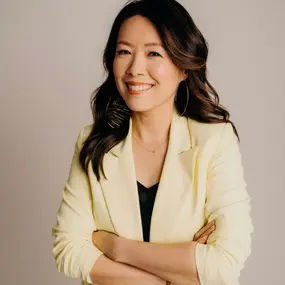
Palliative care/hospice doctor, TEDx speaker, writer, content creator
Dr Luyi Kathy Zhang is a palliative care and hospice physician, TEDx speaker, writer and content creator. Her mission is to change the cultural conversation around death and dying by turning fear and avoidance into curiosity and connection.
Through her years at the bedside—combined with her background in coaching and clinical hypnosis—Dr Zhang shares what serious/terminal illness actually teaches us about being human, using real stories to remind us what’s truly important, and to empower people to live with more authenticity, bravery, and connection — starting now, not "someday”